Quality and Compliance
What is tested where in the process, which certification files exist for which product family, and which documents ship with an order — stated precisely enough to verify.
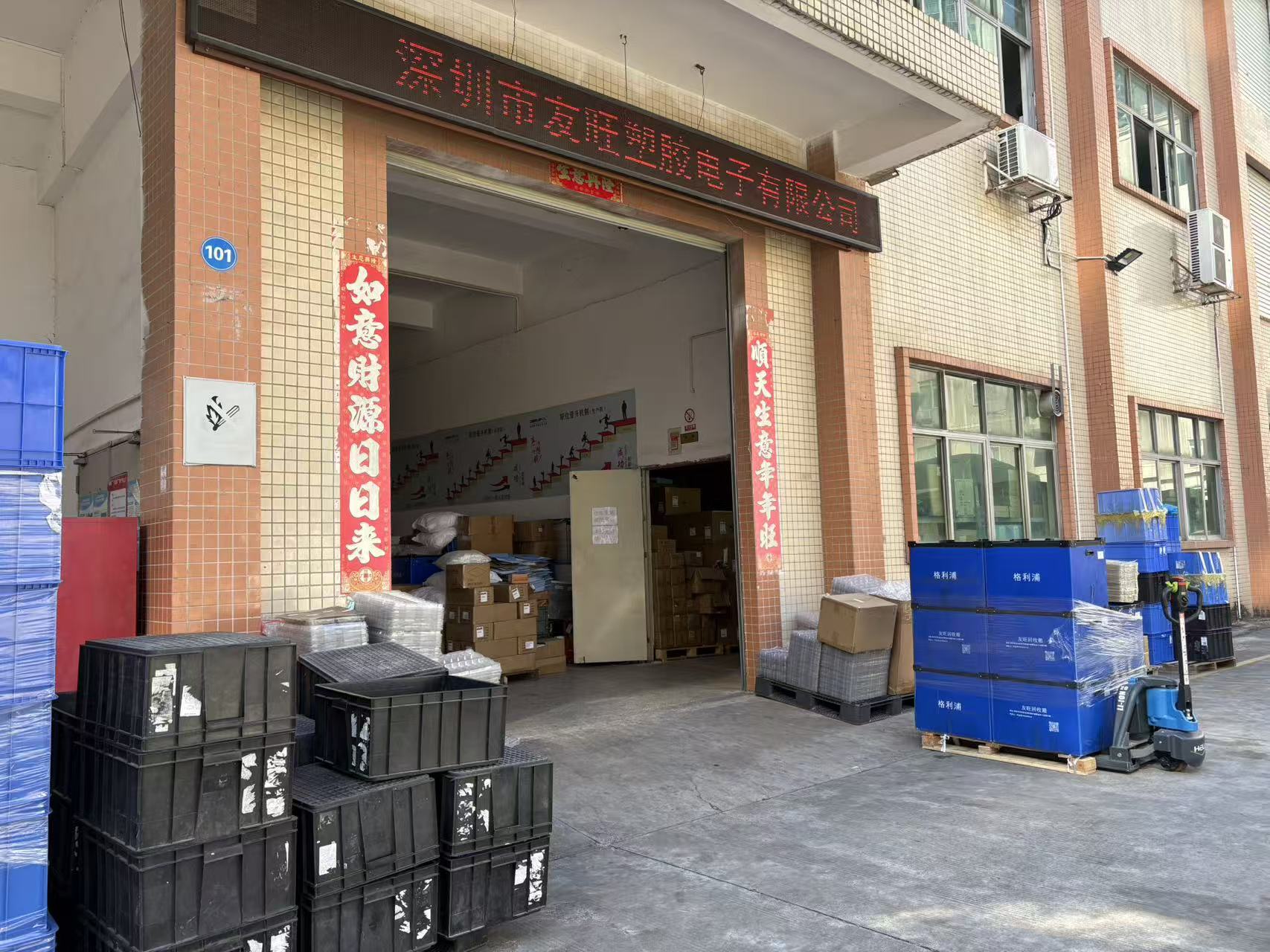
Quality control runs through the whole process, not a final gate: the 8 SMT lines run solder paste inspection (3 systems) and automated optical inspection (5 systems) on every panel, with X-ray for BGA joints; four final assembly lines test every finished unit against functional and safety checks using more than 50 test instruments. Certification and test documentation is held per product family — CE, FCC, RoHS, IPX7 and battery transport files — and we confirm in writing exactly which files cover which model before an order is accepted.
In-line and finished-goods testing
Defects are cheapest to catch at the stage where they occur. Screening is therefore automatic at each stage rather than sampled at the end:
| Test stage | Capacity | What it catches |
|---|---|---|
| Solder paste inspection (SPI) | 3 lines | Checks paste volume and alignment on every SMT panel before placement — the defect most often caught here is invisible after reflow. |
| Automated optical inspection (AOI) | 5 systems | Post-reflow and post-wave inspection of every board, not a sample. Component shift, polarity and solder bridging are screened automatically. |
| X-ray inspection | 1 system | Verifies hidden joints on BGA and other area-array packages that optical systems cannot see under the part. |
| Finished-goods test stations | 50+ instruments | Functional, safety and battery tests run on the four final assembly lines; test records are logged per serial number. |
| Battery pack safety tests | Per pack family | Charge/discharge cycling, protection-circuit verification and pack-level checks before a pack is approved for a build. |
How quality is controlled through the order
- Incoming inspection (IQC) Motors, batteries, PCBs and plastics are checked against specification before release to production. Key components are sampled per lot with results recorded against the supplier batch.
- In-process control (IPQC) SMT lines run SPI and AOI on every panel, with X-ray reserved for area-array packages. Injection and surface-treatment steps are checked against first-article samples retained at each station.
- Final assembly testing On the four assembly lines, every finished unit passes functional testing — suction, navigation, app/radio pairing where fitted, and charging — plus safety checks appropriate to the mains- or battery-powered configuration.
- Outgoing audit (OQC) AQL sampling on packed cartons covers cosmetics, accessories, labelling and carton drop checks before release to shipping.
- Nonconformance handling Lots that fail are quarantined, not reworked quietly. Root cause is documented with the corrective action, and the customer is informed before replacement goods ship.
Certification and test files, stated per family
A certificate is only meaningful if its scope covers the exact product you are buying. These are the files we hold and what each one actually covers — including the documents that are not yet in place for some families.
| File | Coverage | Notes |
|---|---|---|
| CE — EMC and LVD | Spin scrubber families (G001, G002, G003, G004, G017) and the CG2 car vacuum, covering the EMC and Low Voltage Directives. | CE is a family of directives: files are identified per directive and per report number, not as a single "CE certificate". |
| CE — RED (Radio Equipment Directive) | Radio-equipped platforms: robot vacuum families (D3, V6, V8 series) and the WiFi/BLE pet water fountain platform, covering 2.4 GHz WiFi and BLE paths with EN 300 328, EN 301 489 and EN 62311 reports. | Radio products follow a heavier test path than plain EMC+LVD; the RED reports list the exact radio standards covered. |
| FCC | FCC Part 15 test documentation for the appliance families; the WiFi pet fountain platform carries an FCC ID for its intentional radiator. | Unintentional radiators take the SDoC route with Part 15 B reports; intentional radiators (WiFi/BLE) require the FCC ID route. |
| RoHS | RoHS 2.0 (Directive 2011/65/EU as amended) test documentation for the appliance families, tested per homogeneous material. | A housing or cable supplier change can void an old report — RoHS scope is re-verified on BOM changes. |
| UKCA | UKCA documentation for the WiFi pet water fountain platform for the United Kingdom market. | UKCA mirrors the radio and safety test paths for UK placement. |
| CCC | China Compulsory Certification for the D3-series robot vacuum family. | CCC applies to the China domestic channel; export models follow destination-market rules instead. |
| PSE | Japan-market electrical safety documentation for supported configurations. | PSE scope is confirmed per model before a Japan-market order is accepted. |
| IPX7 water protection | Immersion testing (IPX7, 1 m / 30 minutes) for the specified scrubber models. | IPX7 is verified per model with an immersion report — splash-rated models are not marketed as submersible. |
| UN38.3 / MSDS / transport tests | UN38.3 test summaries, MSDS, 1.2 m drop and stacking reports, plus air and sea transport identification for every 18650 pack family shipped. | Forwarders ask for these by pack configuration, not by product model. |
| Design registrations | Appearance design registrations and patents held on several models, including cleaning brushes and the car vacuum, in China, the EU and the US. | Design registrations are intellectual property, not product safety certifications — they are listed separately for that reason. |
Two things worth saying plainly
First, certification status varies by family and we do not blur it: where a family has battery transport documentation only, the quotation says so. Files are held within the same manufacturing group as the plant — Shenzhen Youwang and Shenzhen Geerlepol share ownership and the same production site — so a document issued to one entity covers goods built on the same lines, but the entity named on the file is stated per document, because customs and market surveillance read that name. Second, test reports have a shelf life tied to the bill of materials — a housing or battery supplier change can void an old RoHS or UN38.3 report, which is why files are re-verified on every BOM change and re-confirmed per order rather than quoted once and forgotten.
Documentation supplied with shipments
- CE test reports, identified per directive (EMC/LVD or RED) and per report number — not one blanket "CE certificate"
- FCC Part 15 documentation: SDoC reports for unintentional radiators, FCC ID records for WiFi/BLE platforms
- RoHS 2.0 test documentation per homogeneous material
- IPX7 immersion reports for the scrubber models rated IPX7
- UN38.3 test summary, MSDS, 1.2 m drop and stacking reports — filed per battery pack configuration
- QC inspection report per production lot, on request
- Customer-specific checklists and AQL levels, on request
Certification scope, audits and documents
Which certifications exist for which products?
Documentation status differs by family, and we confirm it in writing before any order: the D3, V6 and V8 robot vacuum families carry CE-RED, FCC and RoHS files; the scrubber and car vacuum families carry CE-EMC/LVD and RoHS files with IPX7 reports on the rated models; the WiFi pet fountain platform carries RED, FCC ID and UKCA files. The V2 robot vacuum family currently has battery transport documentation only, with unit-level certification quoted as a project cost where the market requires it. Files are held within the same manufacturing group as the factory — Shenzhen Youwang and Shenzhen Geerlepol share ownership and the same production site — and the entity named on each document is stated per file.
Can I audit the factory?
Yes. Customer and third-party audits (SGS, TÜV, Bureau Veritas and others) are welcome with about two weeks notice so that the lines you want to see are running. An audit that sees only a prepared line tells you nothing, so we do not stage one.
What documents ship with an order?
Packing list, commercial invoice and carton marks as standard. Test reports, QC lot reports and battery transport documents are supplied where the destination market or forwarder requires them — tell us at the PO stage and they are prepared with the shipment, not after it.
What happens if a shipment fails inspection?
The lot is held at our cost. You receive the inspection findings, the root-cause analysis and a corrective-action plan, and re-inspection is arranged before anything ships. We do not ship known-defective goods and argue about it afterwards.
Need our certification files for supplier qualification?
Send your qualification checklist and we will return the relevant test reports, scope statements and a sample QC lot report in one package.