18650 Battery Pack Integration and Transport Documentation
In-house 18650 pack assembly from 7.4 V to 14.8 V with protection boards, plus UN38.3, MSDS, drop and stacking transport documentation for air and sea freight.
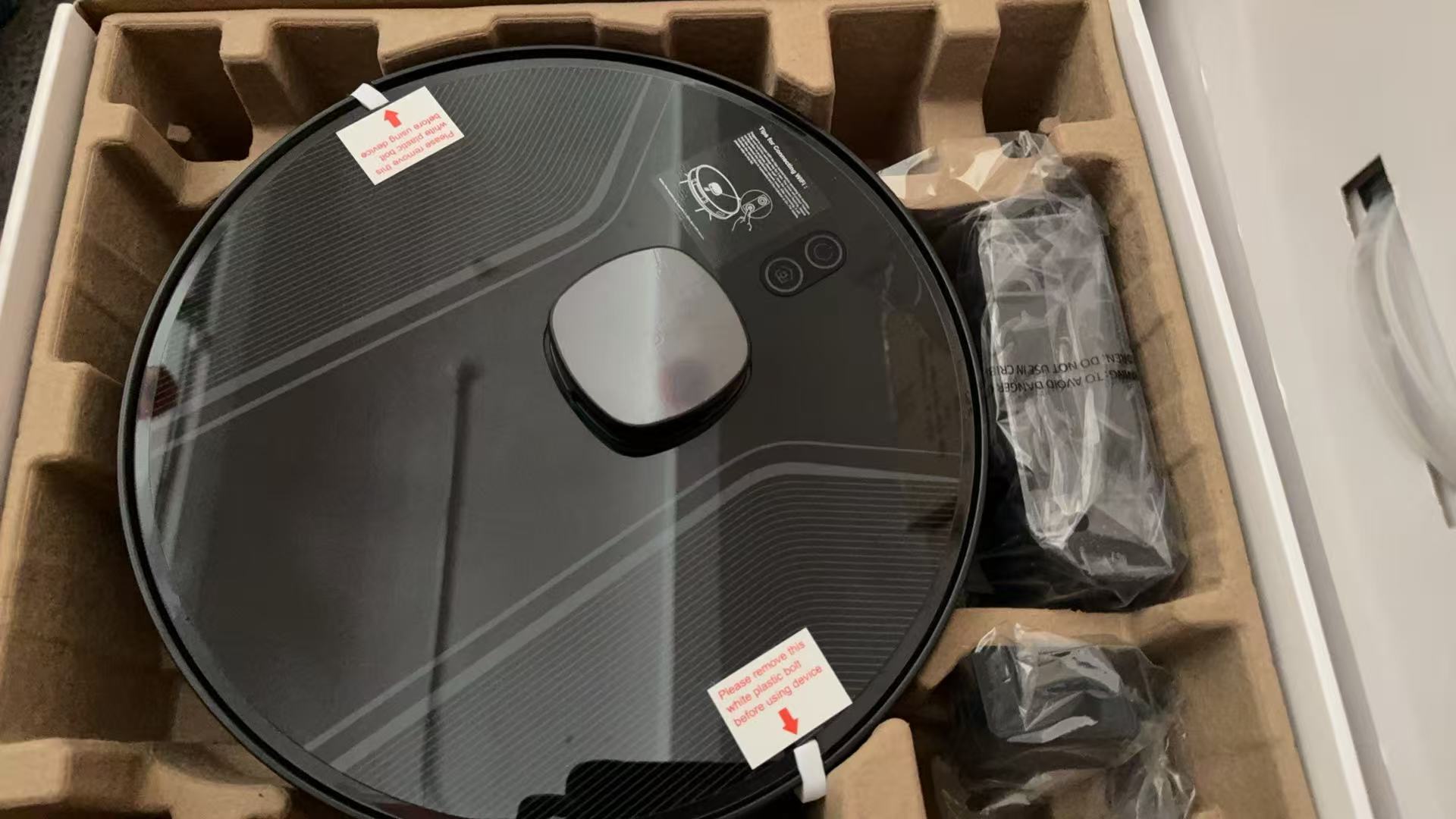
Battery pack integration is the assembly of lithium cells into a protected pack matched to the appliance's discharge profile. Youwang integrates 18650-based packs from 7.4 V (2S) to 14.8 V (4S) in-house for its platforms, with protection boards fitted and every pack family covered by UN38.3, MSDS, 1.2 m drop and stacking documentation for air and sea transport.
When this process applies
This capability covers pack grouping, spot welding, protection-board fitting and electrical verification for the batteries used in our products. We are not a cell manufacturer — cells are sourced from named suppliers with lot traceability, and we say so in the bill of materials.
Technical specifications
| Cell format | 18650 lithium-ion, 2,000–5,200 mAh |
|---|---|
| Pack voltages | 3.6–3.7 V (1S) to 7.4 V (2S) to 10.8 V (3S) to 14.4–14.8 V (4S) |
| Protection | Protection board fitted in-house; over-charge, over-discharge, short-circuit |
| Cycle life | ≥ 300 cycles on scrubber packs |
| Transport files | UN38.3, MSDS, 1.2 m drop, stacking, air and sea identification |
| Cell sourcing | Named suppliers with lot traceability; not manufactured in-house |
Where it is the right choice
- Robot vacuum packs: 2,550–5,200 mAh at 14.4–14.8 V
- Handheld tool packs: 2,000–2,600 mAh at 3.6–7.4 V
- Car vacuum packs: 2,600 mAh at 10.8 V with Type-C charging
- Water-fountain packs where battery-only operation is required
Where it is the wrong choice
Stating this explicitly matters more than a capability list: if your part falls into one of these categories, another process will cost you less.
- Cell manufacturing — we assemble and integrate packs, we do not produce cells
- Packs outside our platform voltage range as a standalone service
- Energy-storage packs above consumer appliance scale
Equipment
- Cell grouping and spot-welding stations
- Protection-board fitting and verification fixtures
- Charge/discharge cycling benches
- Documented archive of UN38.3, MSDS, drop and stacking reports per pack family
Process questions
Do your batteries ship with air-freight documentation?
Yes. Every pack family carries UN38.3 test summaries, MSDS, 1.2 m drop and stacking reports, plus air and sea transport identification documents. These are archived per shipment, which matters because forwarders ask for them by pack configuration, not by product model.
Which cells do you use?
Cells come from named suppliers with lot traceability — we are an integrator, not a cell maker. The specific cell supplier is listed in the bill of materials for your order, and substitutions require your written approval.
How many charge cycles do the packs last?
The scrubber packs are specified at 300+ charge/discharge cycles. Robot vacuum packs are sized for the platform runtime (90–170 minutes per cycle) and follow the same 18650 cycle-life class; we state the specification rather than an optimistic marketing number.
Related capabilities and products
SMT Assembly
Surface-mount technology (SMT) assembly places electronic components onto printed circuit boards at high speed before reflow soldering. Youwang operates 8 SMT lines with 7 Yamaha YSM20R high-speed placers and a Siemens HS60 line, handling 0201 components and BGA packages, with 5 AOI machines, 3 SPI solder-paste inspectors and 1 X-ray machine verifying every batch..
View capabilityAssembly & Testing
Finished-product assembly is the stage where motors, batteries, boards and housings become a working appliance, and end-of-line testing is where each unit is verified before packing. Youwang assembles on 4 finished-product lines supported by more than 50 pieces of test equipment, checking suction, sensor calibration, water-circuit leaks, charge cycles and WiFi pairing on every unit before it is packed..
View capabilityQuality & Compliance
Quality inspection for an appliance ODM order has two layers: end-of-line functional testing on every unit, and third-party compliance testing per destination market. Youwang performs the first layer in-house on 4 assembly lines with 50+ test instruments, and coordinates the second — CE, FCC, RoHS, CCC, PSE and UKCA test documentation exists for its product families and is available for review during supplier qualification..
View capabilityKnowledge Base
Navigation, certification, waterproofing and battery-transport guides written for buyers rather than engineers.
Read articlesSend drawings, get a quote in 24 hours
Upload a STEP file and a drawing. You will receive a fixed-price quotation with lead time and a written DFM report — no obligation, and no sales call unless you ask for one.